
TikTok Shop Livestream Selling Checklist: A Beginner-Friendly Framework (Flow + Metrics + Trust)
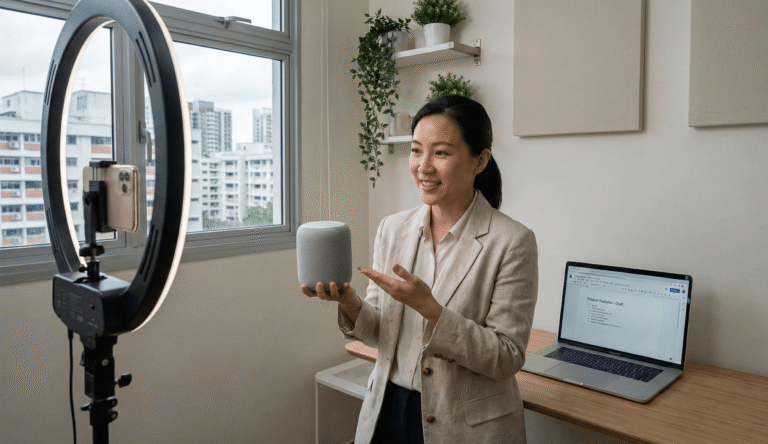
Most beginner livestreams don’t fail because the host lacks confidence—they fail because the live has no structure. Viewers arrive, feel uncertain about what’s happening, and leave before the product story becomes clear.
This article gives you an overview-level TikTok Shop livestream selling checklist for retail teams: a simple flow you can repeat, a step-by-step routine before/during/after live, and a beginner approach to metrics, without going deep into advanced scripts, templates, or coaching methods that belong in structured training.
What you’ll learn today:
A simple live flow that improves clarity and reduces drop-off
A checklist for prep, delivery, and after-live follow-up
The first metrics to track (without overwhelming dashboards)
Trust-first rules that protect your brand and customers
A practical example you can model for your next live
TikTok Shop Training blog post:
https://www.greenmotionacademy.com/tiktok-shop-training-advanced-sales-product-marketing-sg/
Why TikTok Shop livestreams fail (and how structure fixes it)
Beginner livestreams usually struggle for predictable reasons:
The host starts without a clear “what this live is about” message
The product demo is unstructured (rambling, too many details, no clear comparison)
Viewers don’t know what to do next (no simple CTA)
The live doesn’t build trust (unclear claims, rushed tone, or no transparency)
Structure fixes these issues. When your live has a repeatable flow, viewers feel guided, and your team can improve week by week without reinventing the entire process each time.
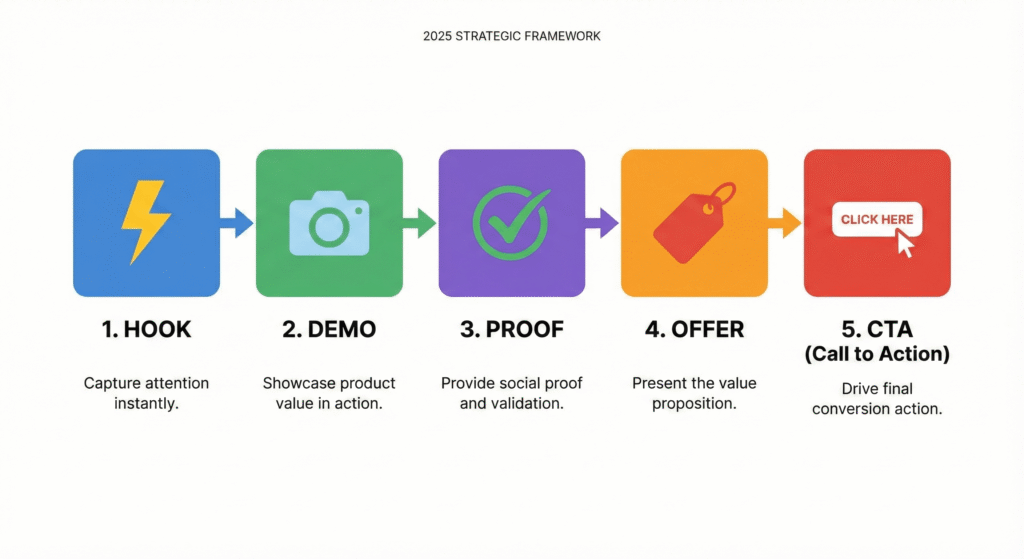
The beginner livestream flow: Hook → Demo → Proof → Offer → CTA
This is a simple five-part flow that works well for retail livestreams. It’s intentionally high-level, enough to create structure without giving away training scripts.
1) Hook (5–10 seconds)
Purpose: tell viewers what they’ll get immediately.
One sentence: what category + what benefit
One sentence: who it’s for
Example (generic):
“Today I’m showing three beginner-friendly options for [need], and I’ll help you pick the right one in under a minute.”
2) Demo (20–40 seconds)
Purpose: show the product simply and clearly.
Keep it to 2–3 key points (problem → benefit → best-fit customer)
Use plain language
3) Proof (10–20 seconds)
Purpose: reduce doubt.
Proof can be:
a clear comparison (“If you want X, choose A; if you need Y, choose B”)
a transparent note (“This is best for daily use; for heavy use, choose the stronger model”)
customer-friendly policy clarity (shipping/returns availability—only if you can state it accurately)
4) Offer (10–20 seconds)
Purpose: clarify what the viewer gets and why it’s a good value.
Don’t over-hype. Keep it simple:
what’s included
what problem it solves
why it’s appropriate for a specific use case
5) CTA (5–10 seconds)
Purpose: tell viewers what to do next—clearly.
Examples:
“Comment your budget range and I’ll recommend the right option.”
“Type A or B and I’ll compare them quickly.”
“If you want the everyday best-seller, choose option 1.”
You don’t need a “hard sell.” You need a clear next step.
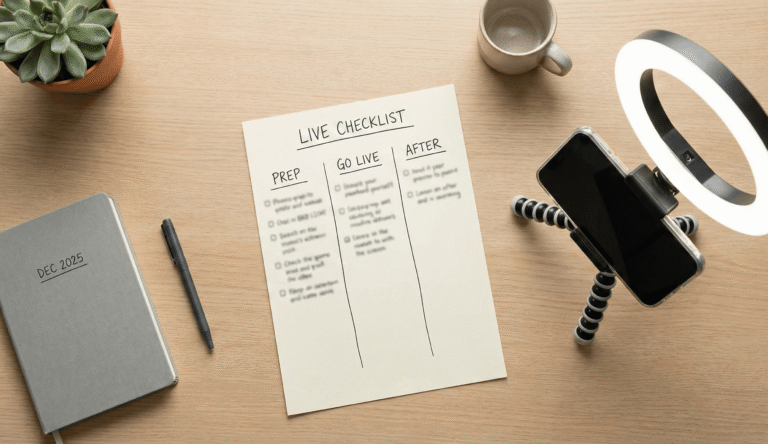
Step-by-step TikTok Shop livestream selling checklist (prep → live → after)
This is a high-level checklist designed to be reusable. Training is where teams get deeper scripts, roleplays, and feedback scoring.
Part 1: Prep checklist (15–30 minutes)
Setup
Stable tripod, clean lens, strong lighting
Clean background (remove clutter)
Clear audio (quiet room, avoid echo)
Product planning
Choose 3–6 products max for a beginner live
Decide order: start with a strong “hero” product, then variety, then best-seller
Prepare a simple “compare” line for each product (who it’s for)
Talking points
For each product, write 3 bullets:
Problem it solves
Key benefit (one clear benefit, not five)
Best-fit customer type
Trust & compliance
Avoid exaggerated claims (“best on the market,” “works for everyone”)
Be transparent about limits (“best for daily use,” “not ideal for heavy-duty use”)
Never show customers or private areas without consent
Part 2: Go-live checklist (keep it consistent)
Opening (first 20–30 seconds)
Say what this live is about
Say what viewers will learn
Tell them how to participate (comment A/B, budget range, etc.)
During the live
Follow the same flow every product: Hook → Demo → Proof → Offer → CTA
Keep a calm, helpful tone
Repeat key points for new joiners (short, not repetitive speeches)
Engagement prompts (simple)
“Comment your budget range.”
“Vote 1 or 2.”
“Tell me the use case: daily / gift / upgrade.”
You don’t need complex engagement tricks, just consistent prompts that help viewers decide.
Part 3: After-live checklist (make improvement measurable)
Quick review
What product got the most questions?
When did viewers drop off (beginning, middle, end)?
Which CTA got the most responses?
Content reuse (optional, simple)
Save one useful segment idea for a short clip
Note the top 3 questions to answer next live
Plan the next live
Choose 1 theme (one category or one customer need)
Keep the structure the same; improve one thing at a time
Structure creates repeatability. Repeatability creates performance.
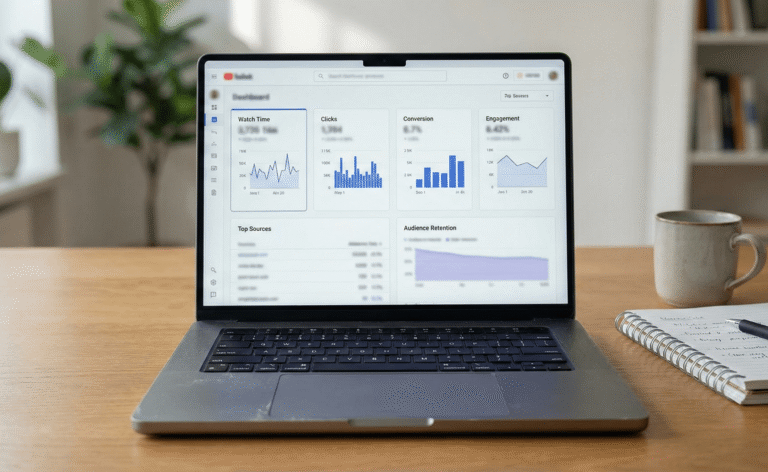
Metrics that matter first (without getting overwhelmed)
You don’t need to track everything at the beginning. Start with a few metrics that reflect clarity and intent:
1) Watch time / retention
If viewers leave quickly, the opening hook or structure is unclear.
2) Clicks (or product page taps)
This shows intent, viewers are curious enough to explore.
3) Conversion (orders)
Conversion often improves after structure and trust improve. Don’t panic if conversion starts low, fix clarity first.
4) Engagement (comments)
Comments often indicate what’s unclear. The best improvement plan comes from recurring questions.
Beginner approach to improvement:
Pick one metric to improve per week (e.g., retention), adjust one thing (clearer opening hook), and keep everything else consistent so you can see what worked.
Trust & compliance basics (privacy, claims, customer respect)
Trust is not a “nice-to-have.” On livestream, trust is the conversion engine.
Privacy and consent
Don’t film customers or staff without explicit permission
Be careful with reflections and background screens
Avoid showing receipts, addresses, or private messages
Truthful product claims
Don’t claim results you can’t prove
Don’t imply guarantees beyond what you can support
If unsure, say so and offer to confirm later
Customer-friendly tone
Pressure language can backfire fast on live. Prefer:
calm comparisons
clear best-fit guidance
transparent limitations
If you need compliance references, use official sources like PDPC (privacy), ASAS (advertising), and CASE (consumer guidance), plus TikTok’s official policy/help resources.
Personal Shopping & Livestream Skills course page:
https://www.greenmotionacademy.com/shopping-livestream-training/
Next step: learn faster with guided training
This blog gives you the overview: structure, a simple checklist, and the first metrics to watch. Training is where you build confidence through guided practice, coaching feedback, and repeatable tools that help teams deliver consistent live performance.
Light CTA:
Want to level up livestream selling with structured guidance?
Explore the course → https://www.greenmotionacademy.com/shopping-livestream-training/
Request intake details → https://www.greenmotionacademy.com/enroll-now/
Book a call / ask a question → https://www.greenmotionacademy.com/contact-us/
About Us: https://www.greenmotionacademy.com/about-us/
Blog: https://www.greenmotionacademy.com/blog/

You may also like
EV Technical Training Basics: A Safe Beginner Overview of EV Systems, Batteries, Charging & Diagnostics
If you’re new to EV technical learning, it can feel like there’s “too much” at once: batteries, charging, power electronics, software, and safety rules. The good news is you don’t need to master everything to start, you need a safe …
Personal Shopping & Livestream Training: How Retail Teams Deliver Better Experiences (In-Store + Live)
Modern retail customers expect two things at once: personalisation and speed. They want to feel understood—without spending an hour explaining themselves. And if they shop through livestreams, they still want the same thing: clear guidance, honest information, and a confident …
EV customers don’t just buy a vehicle—they buy into a new routine. Charging, range confidence, and long-term value can feel unfamiliar, even for customers who already like the idea of going electric. That uncertainty is exactly why EV sales works …